
Odissi Productions
|
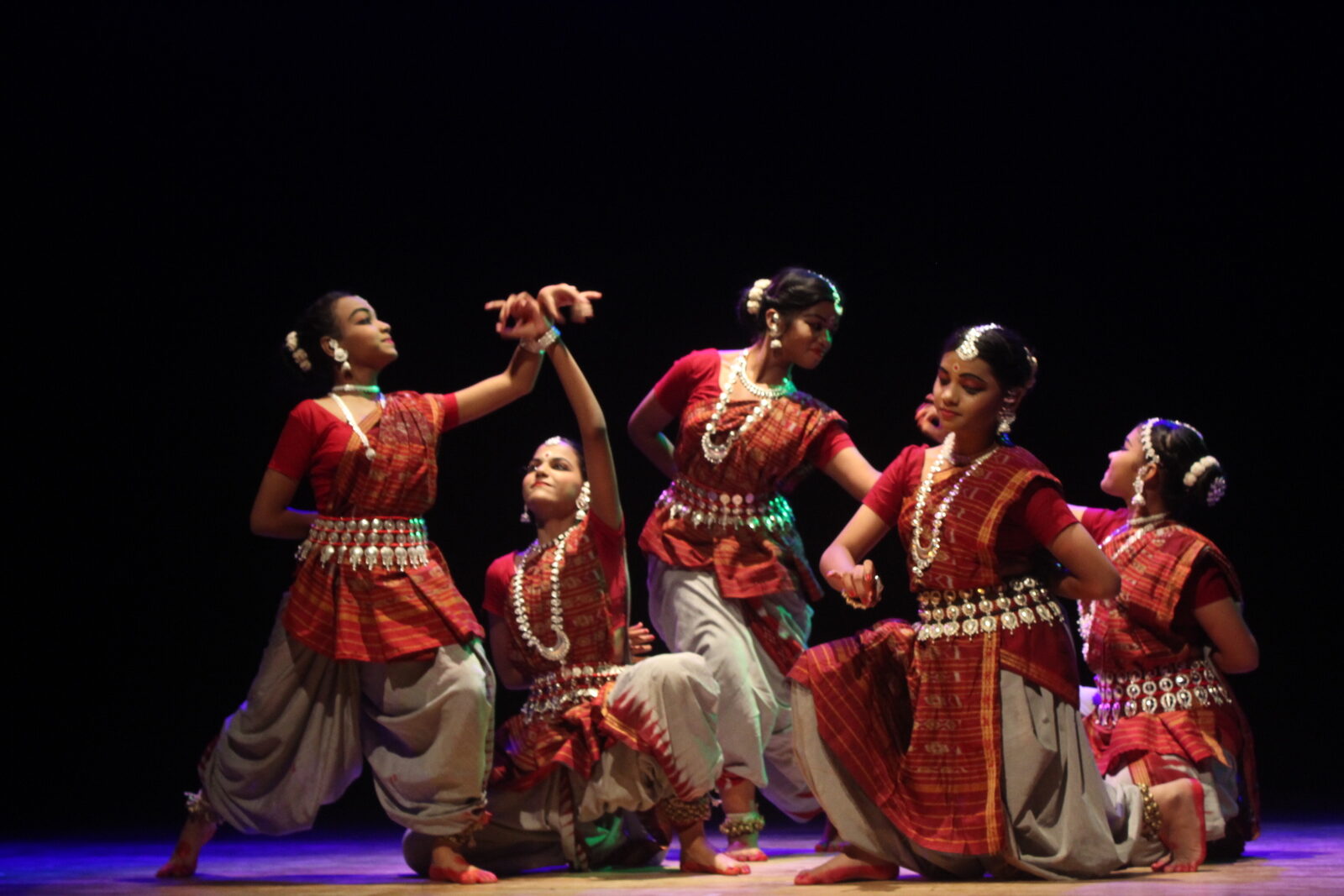
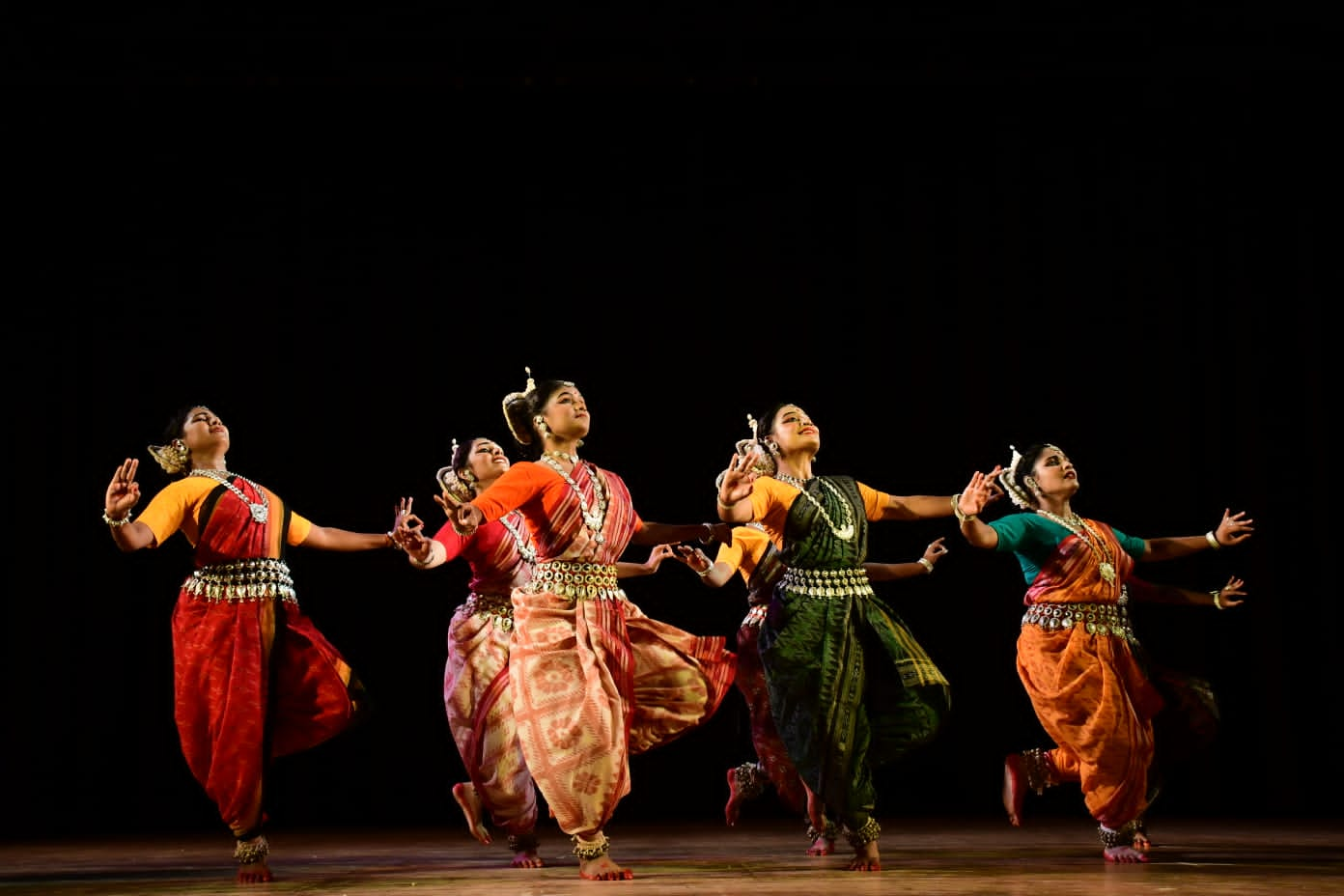
2023 Make Room for Elephants
Make Room for Elephants
Choreography: Ileana Citaristi Music: Sangita Panda |
|
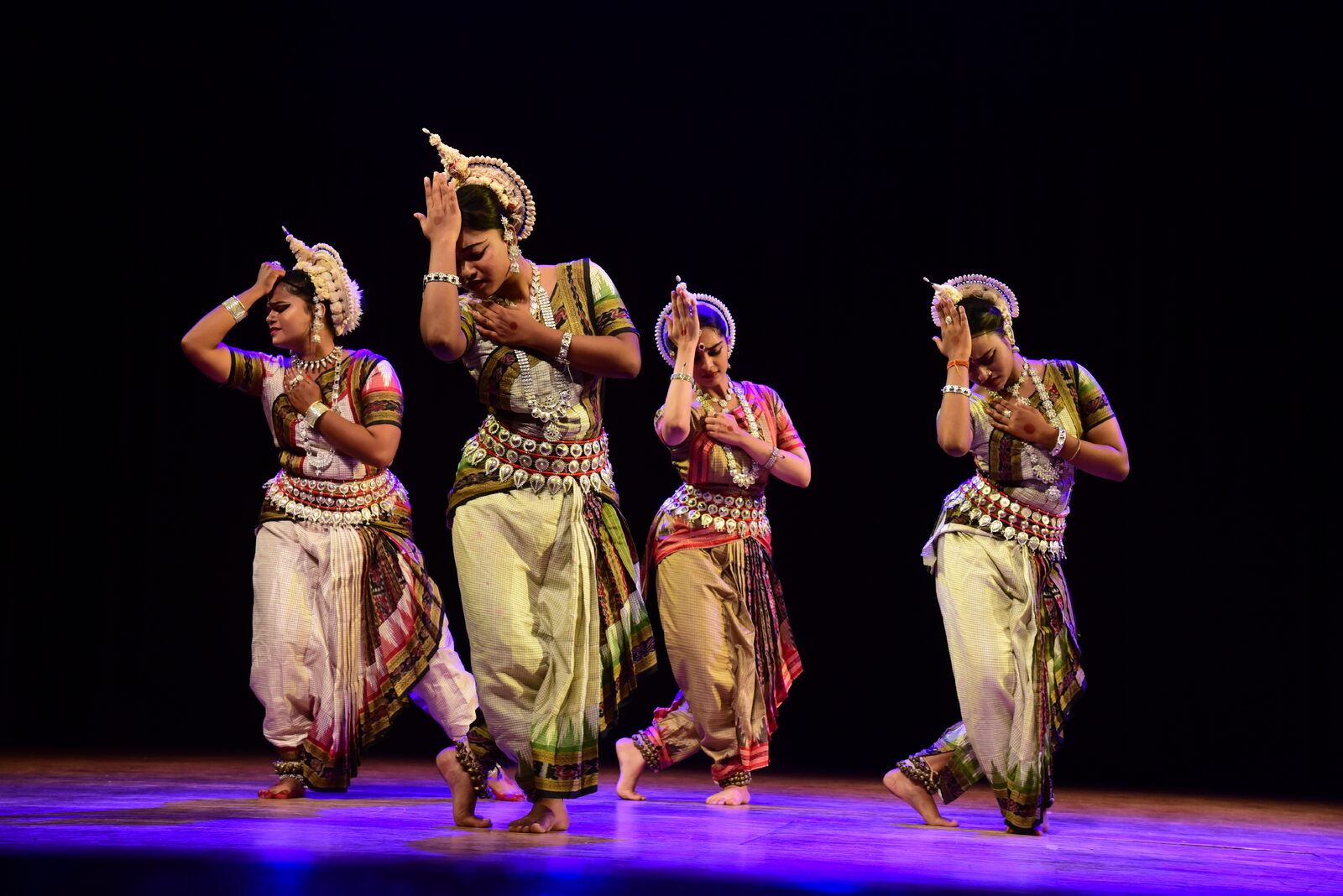
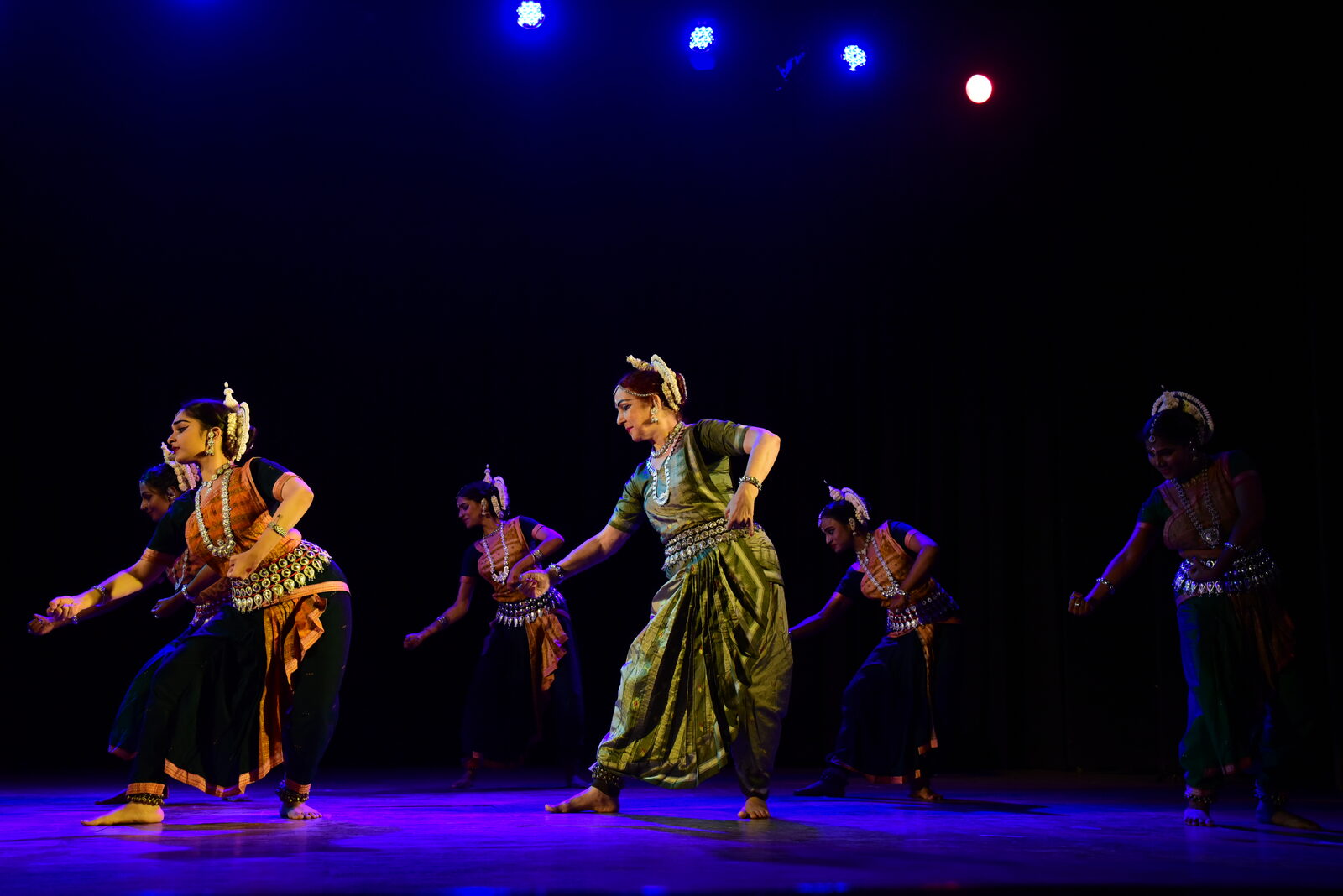
2022 Duara Paka Nata
Duara Paka Nata
Choreography: Ileana Citaristi Music: Roshan Dasgupta |
2021
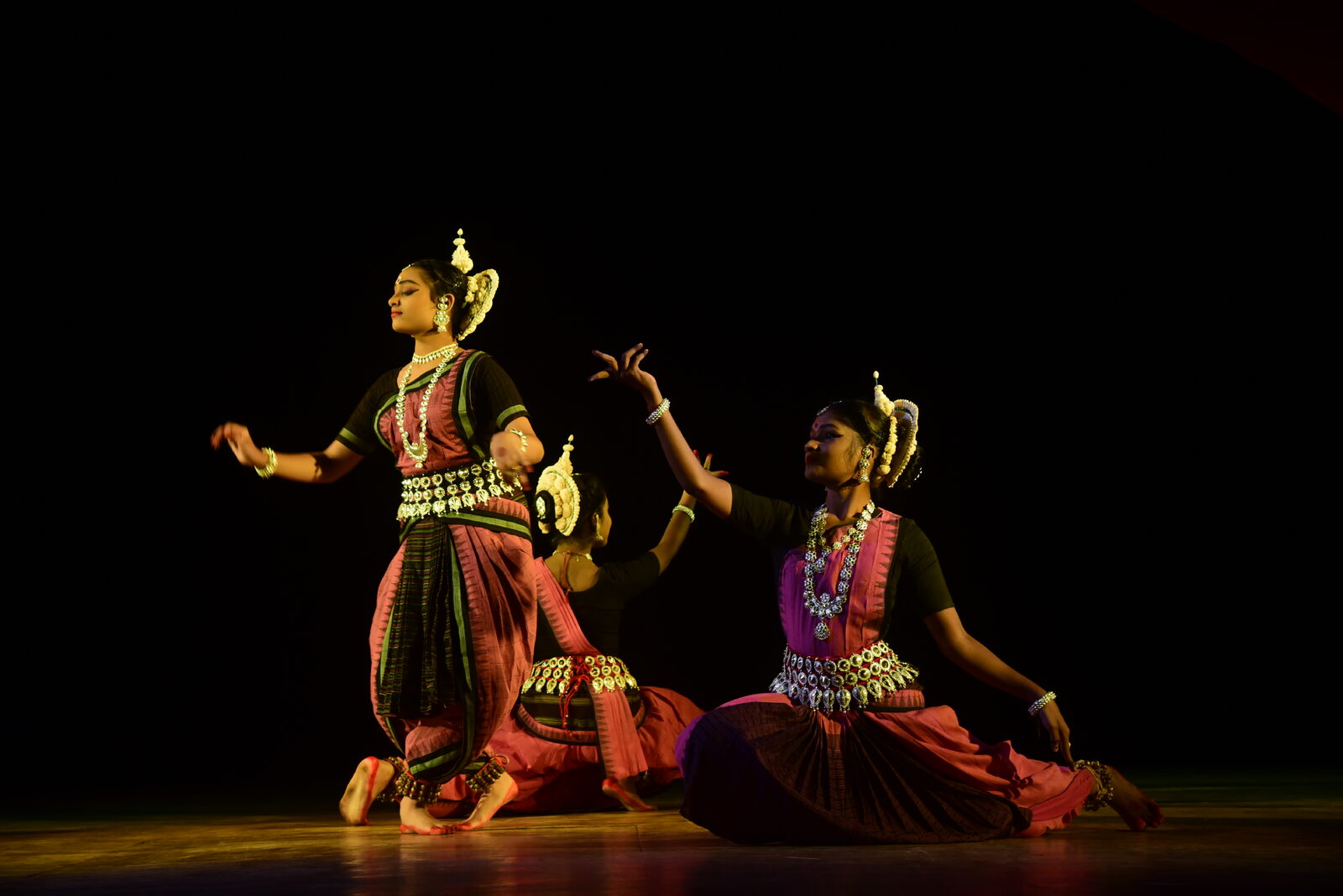
Sabda Swara Pata
Click on Image for Video Clip
Sabda swara pata pallavii
Raga: Ananda Kedari
Tala: Ektalii
An elaboration of four basic bhangi of Odissi dance: alasa, manini, taranga and biraja.i
Choreography: Ileana Citaristii
Music: Ramesh Chandra Das, Surendra MaharanaChoreography: Ileana Citaristi
Click on Image for Video Clip
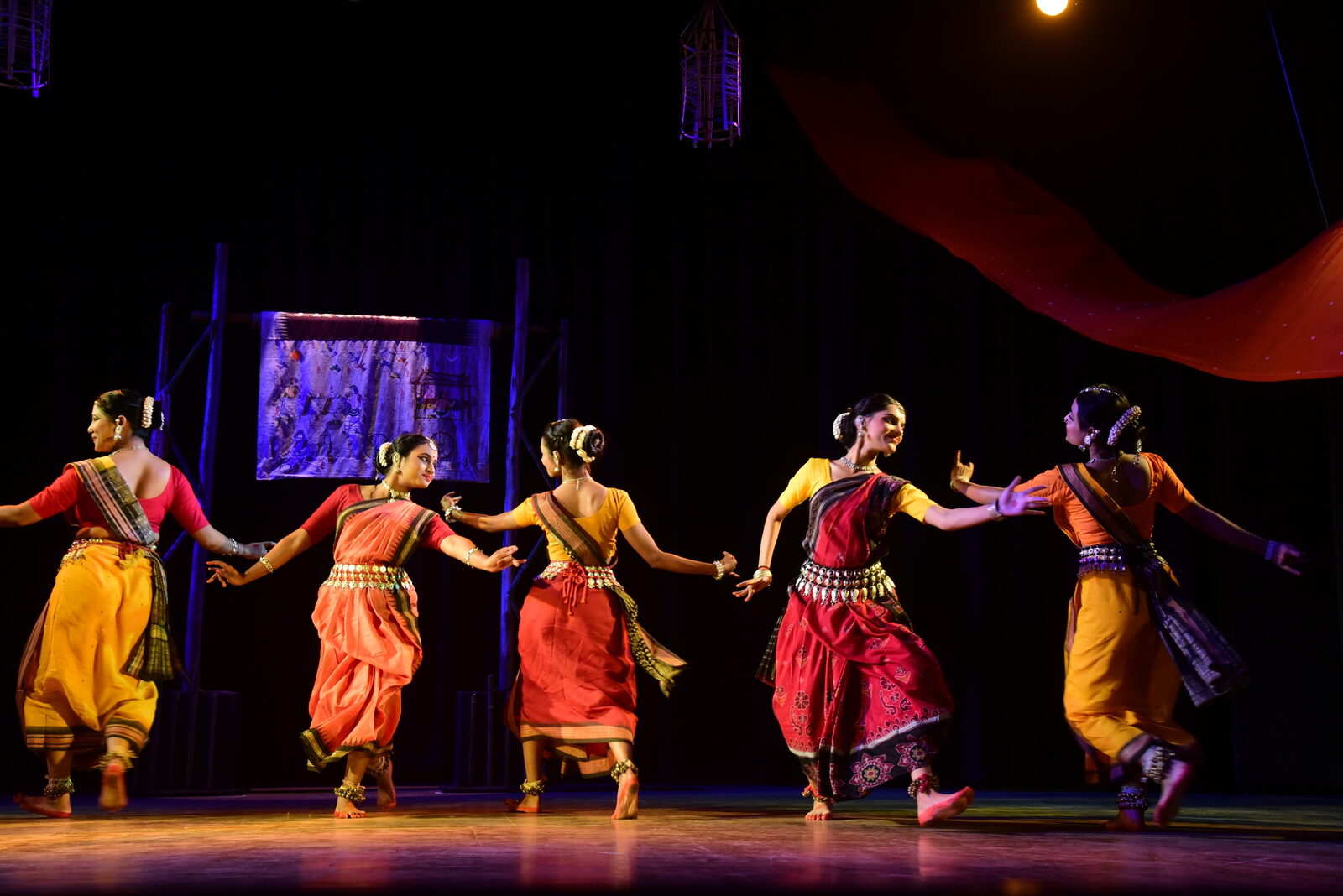
Choreography: Ileana Citaristi
Music: Annada Prasanna Patnaik
Script: Devdas Chhotray
2019
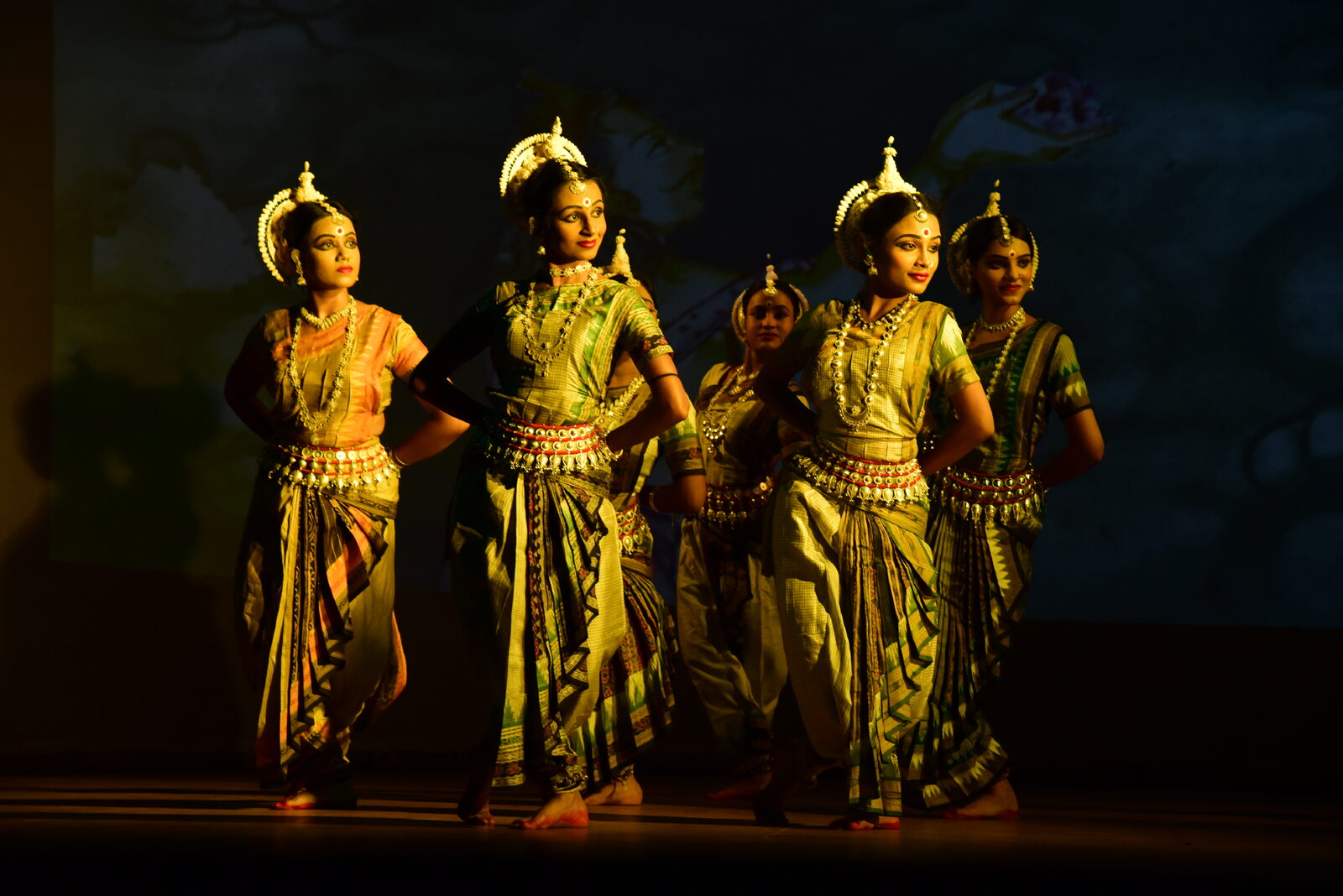
Meghadootam
Click on Image for Video Clip
In this lyrical poem the two prominent features are Love and Nature, both blended with vivid imagination. Of Nature the poet describes birds, cranes, peacocks, flowers, mountains and rivers as miniature paintings and backdrops to the sentiment of deep love in separation. The advent of the monsoon season gives hope to the lover to be able to convey through a cloud a love message to his beloved who leaves far away in the Himalaya mountain.
Choreography: Ileana Citaristi
Music: Laxmikanta Palit
Rhythm: Satchidananda Das
|
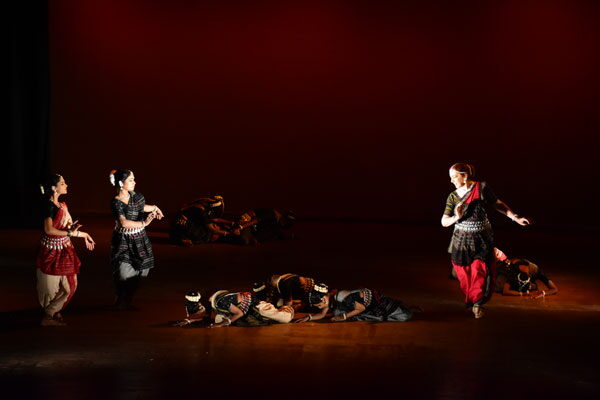
2018 Refugee
There was a time when man’s travel path was free like a bird’s flight. This world too was un-demarcated like the sky and the oceans. A traveller or a sailor was free to reside wherever he reached. The world has changed now. Victims of violence, religion and politics, thousands of innocent and non-aggressive people are becoming refuges every moment. Their earth is dissected, their geography is scuttled. They move on unremittingly in sand and snow, along the railways tracks and in shaky sailing boats. They have no address of their own. The landscape of the earth is now full of refugees. Odia poetry: Devdas Chhotray |
|
2016 Akshara
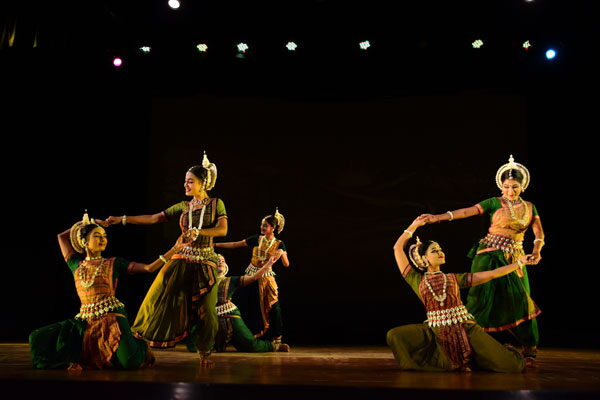
'Akshara' is a poetic composition which captures dancing with the Odia alphabets in a mood of gaiety, both as dalliance and also as a homage to this rich and ancient language. It begins with the rituals of commencement of writing in any Odia village by drawing three circles on the dry mud with lime sticks. Those initial shapes and shadows of roundness denote the genesis of Odia alphabets and carve out in our minds the formless forms of our Gods and Eternity. Odia poetry: Devdas Chhotray |
|
2014 Siddhartha
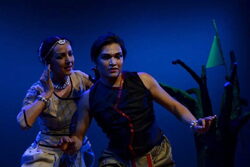
Hermann Hesse’s ‘Siddhartha’, written in 1922, is a book which, in the early 70’s, inspired a whole generation of young people on their spiritual journey in search of a deeper meaning of life. The protagonist, a young Brahmin, is in search of his self-realization and to reach this goal abandons the paternal home and takes to the life of a wanderer. But an ascetic life and shunning all temptations , does not give him a sense of fulfillment either. He experiences the highs and lows of the sensual pleasures, the lure of money and addiction to gambling, until, almost on the verge of desperation, he finally finds peace on the bank of a river, where an old boatman teaches him the meaning of life the way he has learnt it from observing and listening to the river. He directs Siddhartha to listen to the river and search within himself for an understanding of what the river says. Odia poetry: Devdas Chhotray |
|
2013 Gaia-Mother Earth
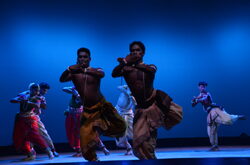
This Odissi-Chhau production is based on a folk tale meant to inspire love and respect towards mother Earth and exhorts men not to destroy the natural environment. The Moon wanders why the trees and vegetation which she is nurturing with love and affection are not bearing any fruit? Men are seen altering the natural course of rivers, plundering the womb of mountains, mining rocks, cutting trees, causing death and destruction to animals and vegetation. The Moon exhorts men to rectify their deeds; only by reconciling with Nature and by considering Earth as their own Mother they will be able to live a happy life. Choreography: Ileana Citaristi |
|
2012
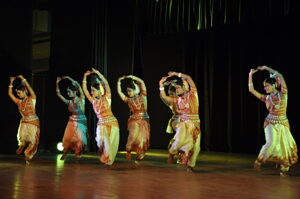
A dance
production on Time. It travels through different phases.
From the latent aspect of the unmanifested Time (‘hrdya
) to the first pulsation (spandan) or primary element to
organic life ( Time as creator).For man to comprehend
the movements of Time a language of geometry emerges:
linear lines, concentric circles, cones, squares and
triangles(Time as movement). |
|
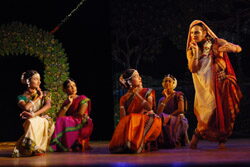
2011 MAANA BHANJAN
A traditional Odissi
dance-drama based on the original script by Babaji
Vaishnava Charan Das and Mohan Sunder Dev Goswami. It is
the story of the offended Radha, seductive Chandrabali
and repentant Krishna, who undergoes different disguises
in order to win back Radha’s trust; a classic belonging
to the preliminary stage of the Odissi revival. Behind
the dramatic plot, which has elements of pathos as well
as comic overtures, lies the philosophy of total
surrender and final merging of the individuals into the
universal soul , propagated by the Vaishnav faith. |
|
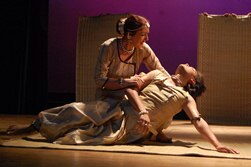
2010 KARUNA
Odissi presentation inspired by Mother Teresa’s life This is the story of a
woman who, at a certain point of her life, leaves
everything behind to follow a call towards the unknown,
carrying with her only her unshakable faith and her love
for the poorest of the poor, the dying people abandoned
on the road, the children without parents and the hungry
humanity. |
|
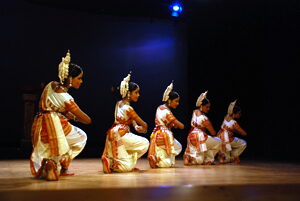
2009 Jalai rakha- A lamp somewhere
A modern Oriya poem which
exhorts us to keep alive a flame symbol of hope also in
the worst dark situations which life may offer.
“Whenever darkness seems to submerge you, sailing in the
black ships of waves or it grows mighty like a gail to
touch the horizon of your desolation, if you remember me
then, I will tell you in secret to keep glowing a lamp
somewhere, a shift of light which refuses to die” says
the poet. |
|
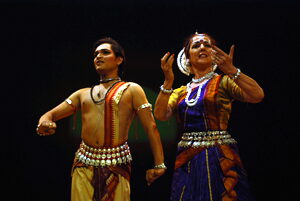
The immortal sermon
delivered by Lord Krishna to Arjuna in the battle field
of Kurushetra, the Bhagavad Gita, is a lesson of life
which still stands meaningful in today world. “ As the
ignorant performs action being attached to it even so,oh
descendant of Bharata, should the wise perform action
unattached, desiring the welfare of the world.
Renouncing all actions in me, with your mind resting on
the Self and giving up hope and idea of ownership, fight
being free from doubts” |
|
2008
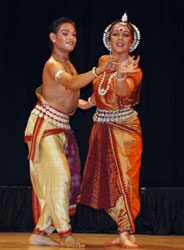
A joyful interplay of movements and rhythm between two dancers.. They respond to the rhythm created by the percussion and at the same time create their own rhythm by contact with each other. Choreography: Ileana Citaristi |
|
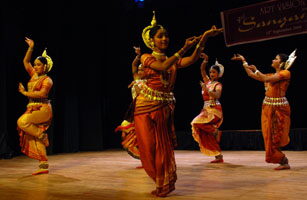
Pallavi
Elaboration of melody, rhythm and choreographic patterns in space. A soft blossoming forth of music and dance ending in a crescendo. This pallavi is in raga Belahari and Tala Ektali. Music composition:
Laxmikanta Palit |
|
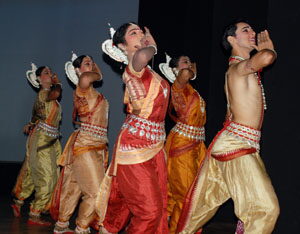
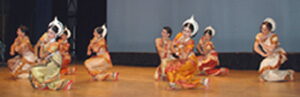
Mahanadi…and the river flows
Thematic presentation based on the saga of the great river of Orissa, cradle of Oriya culture. Although it originates in Chattisgarh, the Mahanadi is almost synonymous with Orissa, its history and geography. In this production various myths related to places which are located along its course are depicted. Like the myth of Sabari who waits for Lord Rama in the kantak bana or forest of thorns situated on the bank of the Mahanadi. Or the story of Visuavasu who worships the tribal god Nila Madhava in Kontilo, a small hill inside the river. And the story of Lord Jagannath who was carried along the river upto to Patali Cuttack to escape from the ire of Kalapada. In the past the Oriya merchant used to start their journey from Cuttack along the Mahandi to reach the faraway land of Indonesia on the full moon night of the month of Kartika. Lyric by: Devadas
Chhotray
|
|
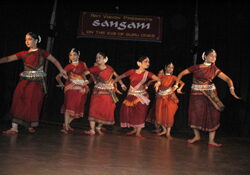
2007 Bolero :(group)
An Odissi rendition of the famous music
score of Maurice Ravel, which has inspired choreographers and dancers
all over the world. Tarana:Rhydhum (duet) A joyful item of pure dance. The two
dancers keeps pace with the creative interplay of rhythm and voice of
the Hindustani musical composition. Raga: Yeman Kalyani |
|
2006
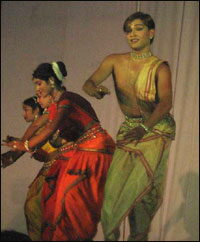
This is a dance production based on the environmental issue of ‘agro-biotechnology’ or eco-friendly relations between man and nature. It has been conceived and produced on the occasion of the first conference on agro-biotechnology held in Hyderabad in March 2006. The Moon is looking down and commenting about the fate of the crops which used to be healthier before and asks: Why is it so? The farmers are seen, arresting natural course of water, excavating mountains, planting seeds, spraying chemicals for better profits etc. The Moon is continuing his monologue: Why should Mother Earth give fruits? Her breast is aching, her womb is in pain, she curses the farmers and this is the cause for bad crops and depression and cases of suicides among them. She exhorts the farmers to threat Mother Earth with gentleness and care instead of greed and harmonize with her resources. Farmers understand their mistakes; change attitude. The cotton tree starts again to give its white flowers and farmers celebrate. Script: P. K Misra
|
|
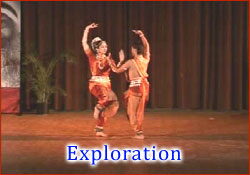
EXPLORATION
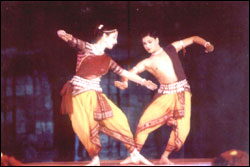
An item of pure nritta. A joyful play between two dancers who explore the space around the central gravity point in alternate movements of attraction and expansion. Credits:
Choreography: Ileana Citaristi
|
|
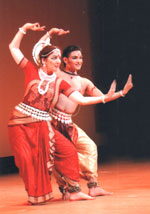
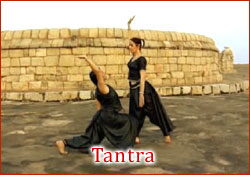
Tantra (duet)
The item has three sloka from the Saundaryalahari, the tantric text dedicated to the female energy. This item visually represents the ascent of the kundalini in its snake-like form from the Muladhara chakra upto the Sahasrara or the thousand petalled lotus where she sports with the male principle and her descend to her original abode, the Muladhara where she turns herself into a serpentine coil.
Music composition: Sri Gopal Panda
|
|
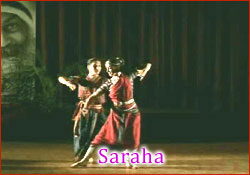
Saraha
SARAHA, is inspired by the tale of Saraha, the founder of the Tantric discipline in the Tibetan region. Saraha means ‘one whose arrow is shot’. Saraha is in search of a master; he symbolises the man who has lost the contact with the natural part of himself. ‘ The learned has to go to the vital. The plastic has to go to the real’ as Osho says. Saraha finds the real master not in the learned or in the ascetic but in a low cast woman who is totally absorbed in cutting an arrow-shaft in a market place.. The arrow ready, the woman, closing one eye and opening the other, assumes the posture of aiming at an invisible target. There is no target, still she is wholly absorbed in aiming the arrow. The aiming itself is the target. The non dual is the aim Realizing this, seeing into the woman’s action, Saraha totally surrenders to her. They celebrate their union, dancing together in a cremation ground. Where death is,they celebrate life. This is the beauty of Tantra- it joins together the opposites, the contradictories.
Music by: Sri Anwar Khurshid
|
|
2005
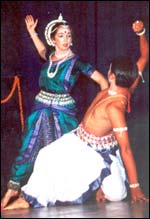
Chitrangada (Duet)
The episode of Arjuna and Chitrangada is described in the last canto of
the Mahabharata, after the end of the great war. Arjuna from afar sees the valorous and handsome general and he is pleased to have found an enemy worthy of him. They challenge each others and after finishing the horse and sword fighting, the two warriors engage in wrestling. At the contact of each others' bodies, their eyes merge and lost in each other's sight, they fall in love..
Through the experience of love Chitrangada for the first time is able to
discover the feminine part of her nature which had been denied to her
since childhood.. |
|
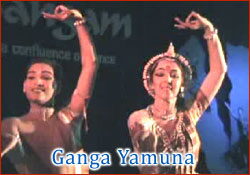
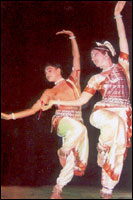
Abhinaya: Ganga-Yamuna (Duet)
The confluence of turbulent Jamuna and luminous Ganga is described by
poet Kalidasa in the XIII canto of his poem 'Raghuvamsa' as if two
different strings of blue sapphires and white pearls are strung
together; or like a garland of white lotuses which has blue lilies
interspersed in between. The currents of Ganga separated by the influx of the waves of Jamuna, are like the ashes-besmeared body of Shiva on which black and dangerous cobra are playing.
Dance composition: Dr Ileana Citaristi |
|
2004
Shivasthakam (group) |
|
2003
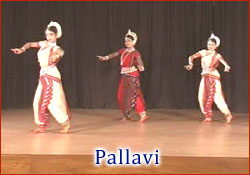
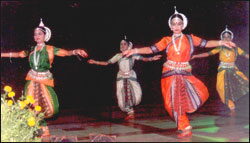
Kapalika Shiva (trio) Pallavi (group)
The pallavi is an item of ‘nritta’ or pure dance where lyrical music is
interwoven into the fabric of body movements. A soft blossoming forth of
music and dance ending in a crescendo. The pallavi is a distinctive item
of Odissi dance. It is a creative elaboration which flows along and
heightens the unique character of a raga. It works up effects mainly
through rhythmic variations and cyclic patterns. |
|
2002
Abhinaya (Duet) |
|
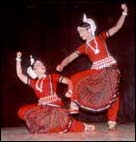
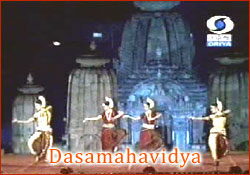
Dasa Mahavidya (group)
Dasa
Mahavidya’ or the ‘ten forms of supreme knowledge’ depicts the ten
incarnations of Devi according to the tantric school of Indian
philosophy. In this item each form of Devi is presented through a brief
visualisation of her myth of origin followed by the description of her
anthropomorphic form. The ten incarnations are: Kali or the ‘black
goddess’, Tara ‘who guides us across the sansara’, Tripura Sundari ‘who
is lovely in the three worlds’, Bhuvaneswari ‘ whose body is the world’,
Chinnamasta ‘the self-decapitate one’, Bhairavi or ‘the fierce one’,
Dhumavati ‘born out of smoke’, Bagalamukhi ‘who paralyses’, Matangi
‘whose limbs are intoxicated’ and Kamala ‘the lotus goddess. |
|
1993
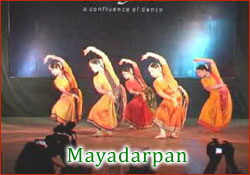
Maya Darpana (dance ballet)
The concept of Maya in Indian philosophy is as metaphysical as poetic. Maya Darpan, the choreographic composition based on the Odissi style, has been inspired by the poetic treatment of the concept of Maya in various Upanishads.
In the first scene we are facing the watery surface of the Timeless
Being; the moment ‘Time’ or ‘Rhythm’ creeps in, the dimension of ‘Space’
takes shape and ‘Prakruti’ or Nature is born.
Until tired of this endless run, man looks inside himself and
rediscovers the original unity of all. |
 Click on Image for Video Clip


